
Keynote 1
From Digital Twins to Cognitive Twins: Closing the Metacognitive Loop for 6G and Beyond Wireless Systems
|
Prof. Ian F. Akyildiz Technology Innovation Institute and International Telecommunications Union |

Abstract:
For fifty years, we have been manually engineering networks, writing static protocols for every possible scenario. That era ends with 6G. We have reached a tipping point where the complexity of Terahertz frequencies, holographic beamforming, and massive MIMO exceeds humanity’s ability to write static protocols and manage the networks with legacy tools. This talk is not about an evolution; it is about a revolution. We introduce the transition from the “Internet of Things” to the “Nervous System of Everything”. This talk introduces the Cognitive Goal-Oriented Stack (CGOS), a radical architecture where AI is not an add-on but the core engine itself. Imagine a network that predicts the future, understands the meaning of your data, and rewrites its own rules in real-time. Three intelligent agents work in unison: a World Model that predicts future network states through digital twins; a Strategic Intent Agent that deciphers the meaning behind every transmission; and a Reflexive Physical Agent that executes ultra-fast signal processing at the speed of light. A continuous Metacognitive Loop binds them together, enabling the network to learn, evolve, and self-optimize in real time. This vision extends beyond terrestrial networks to create a unified AI-based ecosystem from deep sea to deep space, the nervous system of future society. The question is no longer whether this cognitive transformation will happen, but how rapidly we can build it.
Speaker’s Bio:
Ian F. Akyildiz (Life Fellow, IEEE) received his B.S., M.S., and Ph.D. degrees in Electrical and Computer Engineering from the University of Erlangen–Nürnberg, Germany, in 1978, 1981, and 1984, respectively. Since Fall 2020, he has served as a Distinguished Professor, as well as the Founder and Director of the Center for Robotics and Wireless Communications in Challenging Environments at the University of Iceland. Additionally, since August 2020, he has been the Founder and Editor-in-Chief of the International Telecommunication Union Journal on Future and Evolving Technologies (ITU J-FET). Dr. Akyildiz has been a member of the Advisory Board at the Technology Innovation Institute (TII) in Abu Dhabi, United Arab Emirates, since June 2020. He is also the Founder and President of Truva Inc., a consulting firm based in Georgia, USA, a position he has held since 1989. From 1985 to 2020, he was the Ken Byers Chair Professor in Telecommunications, the Past Chair of the Telecom Group in the School of Electrical and Computer Engineering, and the Director of the Broadband Wireless Networking Laboratory at the Georgia Institute of Technology. From 2017 to 2020, Prof. Akyildiz was awarded a Megagrant by the Russian government, enabling him to establish the ‘Wireless Networks’ research laboratory. Today, the lab is well-established and conducts cutting-edge research in its field. An IEEE Fellow (since 1996) and ACM Fellow (since 1997), Dr. Akyildiz has received numerous prestigious awards, including the Humboldt Research Award (Germany) and the TUBITAK Award (Turkey). As of October 2025, his Google Scholar metrics include an h-index of 145 and over 155K citations. His current research focuses on AI-Native Future Networks, Networking 2030, the Metaverse, Holographic and Extended Reality (XR) Communications, 6G/7G Wireless Systems, Terahertz Communication, and Underwater Networks.
Keynote 2
Title: From National Coverage to Global Platforms: Evolving the Mobile Network Architecture
|
Dr. Andra Lutu Telefonica, Spain |

Abstract:
Cellular networks are evolving rapidly. Multiple radio generations now coexist to provide coverage, while softwarization and virtualization are reshaping how mobile services are deployed and operated. At the same time, a new class of virtual and global mobile operators is emerging. These operators combine the coverage footprint of a small number of base operators with technologies such as eSIMs and 5G control/data-plane separation to offer seamless connectivity at global scale. In this talk, the goal is to unpack the hidden machinery behind this ecosystem. We explore the interconnection dynamics, architectural dependencies, and operational trade-offs that make global mobile connectivity possible, and present measurement-based results that help reveal how this ecosystem really works. Our work is a first step toward understanding the global mobile Internet as a platform, especially as it becomes central to supporting IoT deployments and increasingly mobile users worldwide. We compare different MNA models, highlighting the limits of today’s IPX-based global operators, and outlining our vision for the next generation of global connectivity platforms.
Speaker’s Bio:
Andra Lutu is a principal researcher and org manager at Telefónica. With more than 10 years of post-PhD experience, her focus is on mobile network architecture design and implementation, integrating ML/DL applications in the telco ecosystem. She has authored more than 70 articles in top venues, such as ACM Sigcomm, ACM MobiCom, ACM Infocom, ACM IMC, ACM CoNext, IEEE TNSM and IEEE TNET. She led contributions to numerous European projects, including SNS-JU ORIGAMI, H2020 DAEMON, H2020 MONROE, and she was a Marie Curie fellow in 2019/20. She currently manages a team of post-doctoral researchers and focuses on fostering international research collaborations with labs both in academia and in the industry.
Keynote 3
Title: Towards Agentic AI at the Edge: Challenges and Opportunities
|
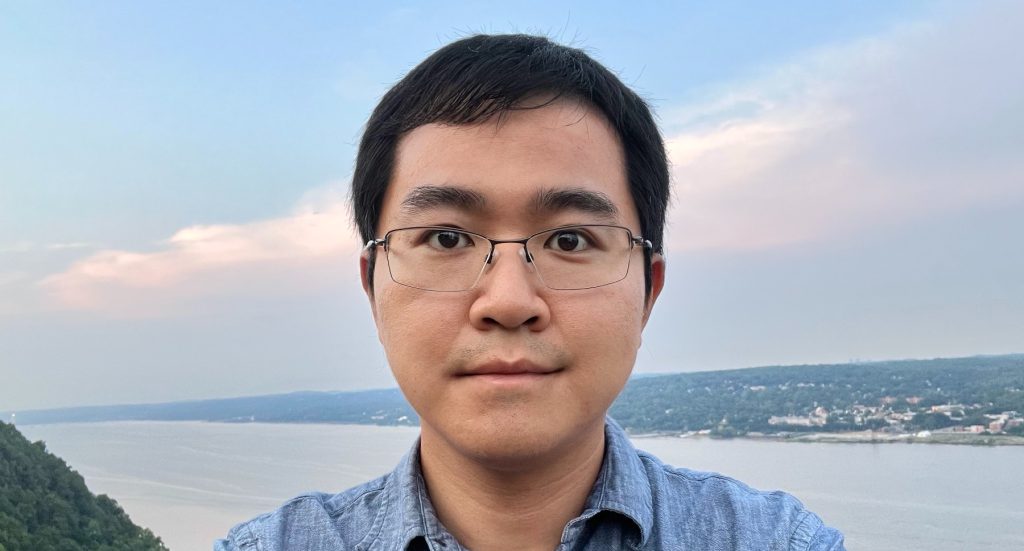
Prof. Shiqiang Wang Department of Computer Science, University of Exeter, United Kingdom |
Abstract:
Agentic AI systems that can reason, plan, and act with tools are becoming a promising paradigm for real world applications, especially at the edge where low latency, privacy, and resilience are critical. However, edge environments impose strict constraints on compute, memory, and reliability, making it challenging to achieve high quality outcomes. In this talk, I will present a perspective on enabling agentic AI at the edge by integrating insights from recent benchmarking and prior work on model selection and routing. Our study shows that agentic performance does not scale simply with model size and instead depends on the interaction between models, tools, and task domains, with non steady scaling trends and distinct failure patterns. Building on this, I will discuss approaches such as MESS+ for cost optimal model routing with service guarantees and TMO for adaptive inference across both local and cloud nodes, which together help balance quality, latency, and cost. I will conclude by outlining key challenges and opportunities in moving toward robust agentic systems through workload aware model selection and system level co-design.
Speaker’s Bio:
Shiqiang Wang is a Professor of Artificial Intelligence in the Department of Computer Science, University of Exeter, United Kingdom. He was a researcher at IBM T. J. Watson Research Center, NY, United States until Oct. 2025. He received his Ph.D. from Imperial College London, United Kingdom, in 2015. His research focuses on the intersection of artificial intelligence (AI), distributed computing, and optimization, with a broad range of applications including large language models (LLMs), agentic AI, efficient model training and inference, and AI in distributed systems. He has made foundational contributions to edge computing and federated learning that generated both academic and industrial impact. Dr. Wang served as an associate editor of the IEEE Transactions on Mobile Computing, IEEE Transactions on Parallel and Distributed Systems, and IEEE Transactions on Computational Social Systems. He also served as an area chair of major AI and machine learning conferences, including AAAI, ICLR, ICML, and NeurIPS. He received the IEEE Communications Society (ComSoc) Leonard G. Abraham Prize in 2021, IEEE ComSoc Best Young Professional Award in Industry in 2021, Best Paper Runner-Up of ACM MobiHoc 2025, IBM Outstanding Technical Achievement Awards (OTAA) in 2019, 2021, 2022, and 2023, multiple Invention Achievement Awards from IBM since 2016, and Best Student Paper Award of the Network and Information Sciences International Technology Alliance (NIS-ITA) in 2015. He is an IEEE Fellow (Class of 2026) and a member of ACM and ELLIS. More details are available on his webpage: shiqiang.wang